Tools & Organization
Best Storage Bins for Homeschool Supplies (That Actually Stay Organized)
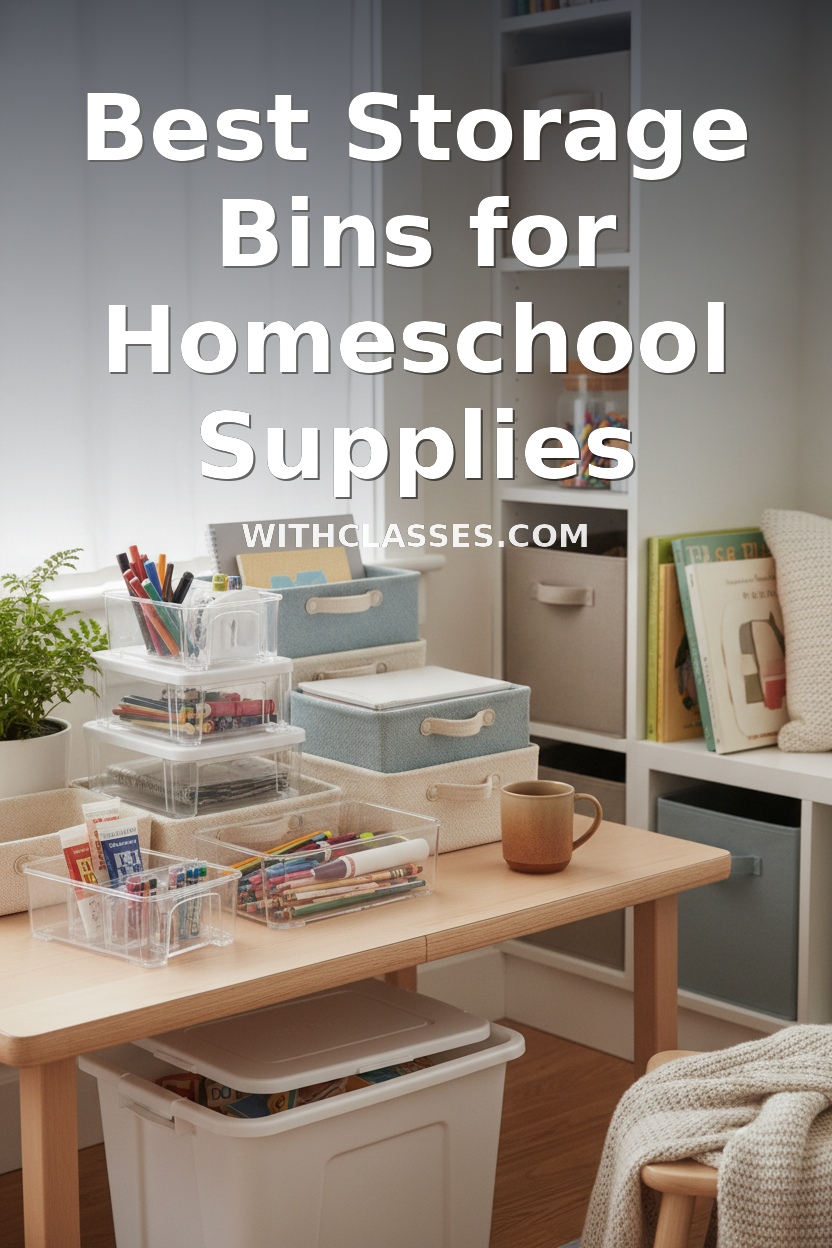
If I had to pick just one, the ECR4Kids 12 Cubby Tray Cabinet wins for most homeschool families — it holds a lot, the clear bins let kids (and you) see everything at a glance, and it's built to last years of daily use. Read on for the full breakdown of all three options and which one fits your setup best.
Top Pick
ECR4Kids 12 Cubby Tray Cabinet — Scoop Front Bins, Clear
This is the workhorse of homeschool organization. Twelve clear scoop-front bins mean you can sort supplies by subject, child, or project type — and everyone in the house can actually find what they need without tearing things apart. The cabinet itself is solid, and the clear bins are a genuine game-changer over opaque containers.
It's designed for classroom use, which means it handles the kind of daily abuse that comes with homeschooling multiple kids. The scoop front makes it easy even for smaller children to grab and replace bins independently, which matters when you're trying to build good habits.
Pros
- 12 clear bins — you can see every supply without digging
- Scoop-front design is genuinely easy for kids to use on their own
- Classroom-grade build quality holds up to daily use
- Stackable and sturdy — doesn't wobble when bins are full
- Great capacity for art supplies, manipulatives, workbooks, and more
Cons
- Takes up meaningful floor or shelf space — measure first
- Bins are not interchangeable with other brand systems
- No lid option if you want to contain messes inside bins
Best for a More Polished Homeschool Room
Guidecraft EdQ Shelves and 10 Bin Storage Unit — Natural
If you care about how your homeschool space looks — and there's no shame in that — this Guidecraft unit is a step up aesthetically. The natural wood finish is warm and clean, and it doesn't look out of place in a home living room or den. Ten bins give you a good amount of sorting capacity without being overwhelming.
Guidecraft makes solid early childhood furniture, and this unit reflects that. It's well-jointed, not wobbly, and feels intentional rather than institutional. That said, it leans toward a younger-child setup, so if your kids are older and you need more adult-scale storage, you may want the ECR4Kids instead.
Pros
- Beautiful natural wood finish — looks like furniture, not a daycare
- 10 bins provide solid sorting capacity
- Sturdy Guidecraft construction — worth the brand name
- Child-height design encourages independence for younger learners
- Works well in living rooms or shared family spaces
Cons
- Bins are not clear — harder to identify contents at a glance
- Sized more for young children; may feel small for older kids or teens
- Higher price point for what you get compared to the ECR4Kids
- Replacement bins may be harder to source
Best for Flexible or Smaller Spaces
Guidecraft EdQ Cubby Toy Storage Organizer — 8 Fabric Bins
This is the softer, more flexible option in the lineup. The fabric bins make it lighter and easier to move around, which is genuinely useful if your homeschool space pulls double duty as a living room or bedroom. Eight bins is enough for a focused setup — one per subject for a single child, or shared categories across kids.
The trade-off is durability and capacity. Fabric bins sag over time with heavier supplies like hardback books or full sets of manipulatives. This works best for lighter items — art supplies, flashcards, small workbooks, sticker collections — and for families who want something that can be tucked away at the end of the day.
Pros
- Lightweight and easier to reposition than rigid units
- Fabric bins fold down if you need to store the unit seasonally
- Attractive look that blends into home décor easily
- Good price point for the quality
- Works well for lighter supplies and smaller homeschool setups
Cons
- Fabric bins sag with heavier items — not ideal for books or bulky supplies
- Only 8 bins; may not be enough for a multi-subject or multi-child setup
- Less durable long-term than hard-sided options
- No visibility into bin contents without pulling them out
Summary: Which Storage Bins Are Right for Your Homeschool?
Every homeschool setup is different. Here's the quick version of which unit to reach for:
The most practical pick for most homeschool families. Clear bins, high capacity, classroom-tough build. If you want one unit that just works, start here.
View on Amazon →Worth it if your homeschool space is in your main living area and you want something that looks intentional. Best for younger kids and lighter supplies.
View on Amazon →A smart choice if your homeschool space does double duty or you need something easy to move. Stick to lighter supplies and it'll serve you well.
View on Amazon →Frequently Asked Questions
How many storage bins do I actually need for homeschooling?
It depends on how many subjects you teach and how many children you're homeschooling. A good rule of thumb: plan for at least one bin per subject per child, plus a few extras for shared supplies like art materials, scissors, and tape. For one child covering 5–6 subjects, 8–10 bins is usually enough. For two or more kids, you'll want 12 or more. The ECR4Kids 12-bin cabinet tends to be the sweet spot for most families.
What's the best way to organize homeschool supplies in bins?
The system that actually sticks is the simplest one. Label each bin by subject or by child — whichever makes more sense for your household. If you have young children, pair a picture label with the text label so they can put things away independently. Clear bins (like the ECR4Kids scoop-front style) remove half the problem because everyone can see what's inside without pulling bins off the shelf. Resist the urge to over-organize — broad categories hold up better day to day than hyper-specific sorting.
Are fabric storage bins or plastic bins better for homeschool supplies?
Plastic bins are better for heavier or bulkier supplies — workbooks, hardcover books, math manipulatives, science kits. They hold their shape and are easier to wipe clean. Fabric bins work well for lighter items like art supplies, flashcards, or paperback readers, and they're a good fit for spaces where you want a softer, more home-like look. If you're storing a mix of supplies and want one solution that handles everything, go plastic. If your setup is light and you need flexibility, fabric bins are a reasonable choice.