Best Planner for Homeschool Moms: 3 Options Worth Your Money
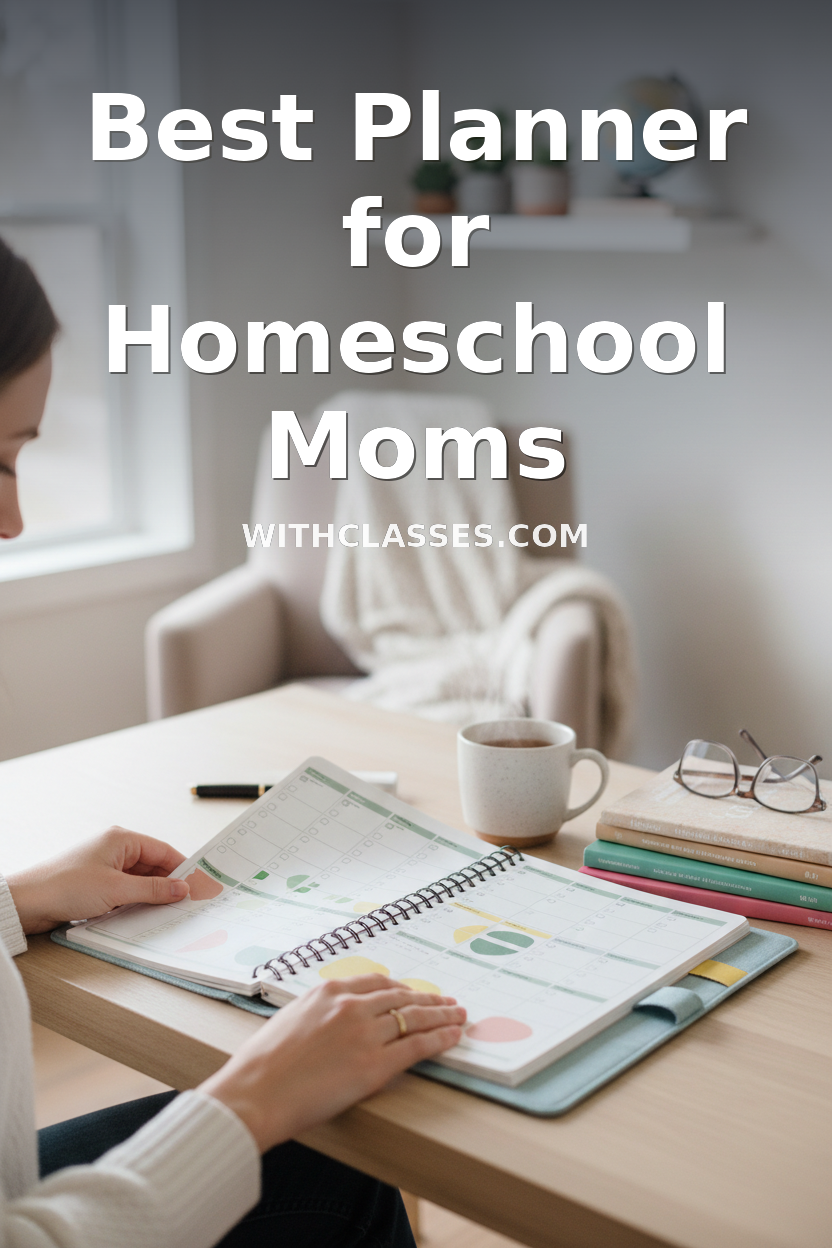
If you want one recommendation right now: the Mega Homeschool Planner Soft Flora is the most complete planner we found for moms managing multiple kids across multiple subjects. The other two are worth considering depending on your budget and how you like to plan — keep reading for the honest breakdown.
This page contains affiliate links. As an Amazon Associate we earn from qualifying purchases at no extra cost to you.
Mega Homeschool Planner and Organizer Soft Flora
This one earns the top spot because it was actually designed with homeschool families in mind — not just adapted from a teacher planner. You get space to plan for multiple kids, track attendance, log grades, and map out your full school year, all in one place.
The "Soft Flora" cover is sturdy without being stiff, and the layout is genuinely intuitive. It's not just pretty; it's functional in a way that holds up through a full school year of daily use.
If you've ever tried to squeeze your homeschool life into a generic planner and given up halfway through October, this one is built for the chaos you're actually managing.
Pros
- Built specifically for homeschool families
- Supports multiple students in one book
- Attendance and grade tracking included
- Full year layout — not just weekly blanks
- Durable, well-made cover
- Undated — start anytime
Cons
- Larger size — not a purse planner
- Can feel overwhelming if you're a minimal planner
- Higher price point than basic options
Clever Fox Teacher Planner with School Year Calendars and Lessons
The Clever Fox planner is a solid mid-range option that works well if your homeschool is more structured and subject-focused — think one or two kids, clearly defined lessons, week-by-week planning. It's built more like a classroom teacher planner, which is a fit for some homeschool styles and a mismatch for others.
The paper quality is noticeably good, and the lesson planning pages have enough detail without being restrictive. The included school year calendars at the front are actually useful for mapping out your year before you start.
Where it falls short is flexibility — if you're unschooling, eclectic, or managing three or more kids, you'll bump into the limits of its structure pretty quickly.
Pros
- Excellent paper quality — pens don't bleed
- Detailed lesson plan pages
- Year-at-a-glance calendars included
- Compact and easy to carry
- Good for structured homeschool styles
Cons
- Designed for one teacher, one class
- Not ideal for multiple kids or flexible schedules
- Limited attendance or grade tracking
- Dated layout may not suit all school calendars
Mr. Pen Homeschool Planner 8.5x11
The Mr. Pen planner is the budget-friendly pick, and it punches above its price point for what you get. At 8.5x11, there's plenty of room to write, and the homeschool-specific layout means it actually has the right sections — subjects, kids' names, weekly schedules — rather than forcing you to adapt a generic format.
It's not going to win on paper thickness or cover durability, and it won't hold up as a long-term keepsake. But if you want a low-cost way to get organized right now — or if you like switching planners every semester to try new systems — this one delivers without the financial risk.
Great starter option if you've never used a homeschool-specific planner before and aren't sure what layout works for you yet.
Pros
- Excellent value for the price
- Homeschool-specific layout — not a repurposed office planner
- Large 8.5x11 size — roomy to write in
- Good for beginners testing a planning system
- Easy to find and reorder
Cons
- Thinner paper — some ink bleed with wet-tip pens
- Cover is lightweight, not very durable
- Less comprehensive than the Mega Planner
- May feel sparse for detailed planners
Our Pick: Which One Is Right for You?
All three planners are legitimate options — they're just built for different types of homeschool families. Here's how to decide quickly:
If you're managing multiple kids, multiple subjects, and need one planner to hold it all: Get the Mega Homeschool Planner. It was made for exactly your situation.
If you run a structured, subject-by-subject homeschool and prioritize lesson planning detail: The Clever Fox is a genuinely excellent planner with better paper quality and lesson layout.
If you're just starting out or want to try a homeschool-specific layout without spending much: The Mr. Pen is a smart, low-risk first step.
Frequently Asked Questions
Do I really need a homeschool-specific planner, or can I use a regular planner?
You can make a regular planner work, but most homeschool moms who've tried both will tell you the same thing: a generic planner means you're constantly adapting the format instead of just planning. Homeschool planners are built around things you actually need — tracking multiple kids, logging subjects, recording attendance for legal requirements, and mapping out an academic year that doesn't follow the same calendar as a public school. A purpose-built planner removes friction and makes it more likely you'll actually use it consistently.
What should a good homeschool planner include?
At minimum, look for: weekly and monthly planning pages, space to plan per subject and per child, an annual overview or year-at-a-glance calendar, attendance tracking, and ideally some grade or progress logging. Bonus features worth having include goal-setting pages, a reading log, and an undated format so you can start any time of year without wasting pages. If you're required by your state to keep attendance records, make sure the planner has a dedicated section for that — it saves you a lot of scrambling later.
How do I plan for multiple kids with different grade levels in one planner?
The key is finding a planner that separates planning by student, not just by subject. The Mega Homeschool Planner does this well — it gives you dedicated sections per child so you're not trying to color-code your way through a single weekly spread. For families with three or more kids at very different levels, some moms also use a combination: one main family planner for scheduling and attendance, and individual student workbooks for daily lesson planning per child. It takes some experimenting to find what works for your family, but having the right planner structure makes the whole system easier to maintain.