Best Nature Journal for Kids: 3 Honest Picks for Homeschoolers
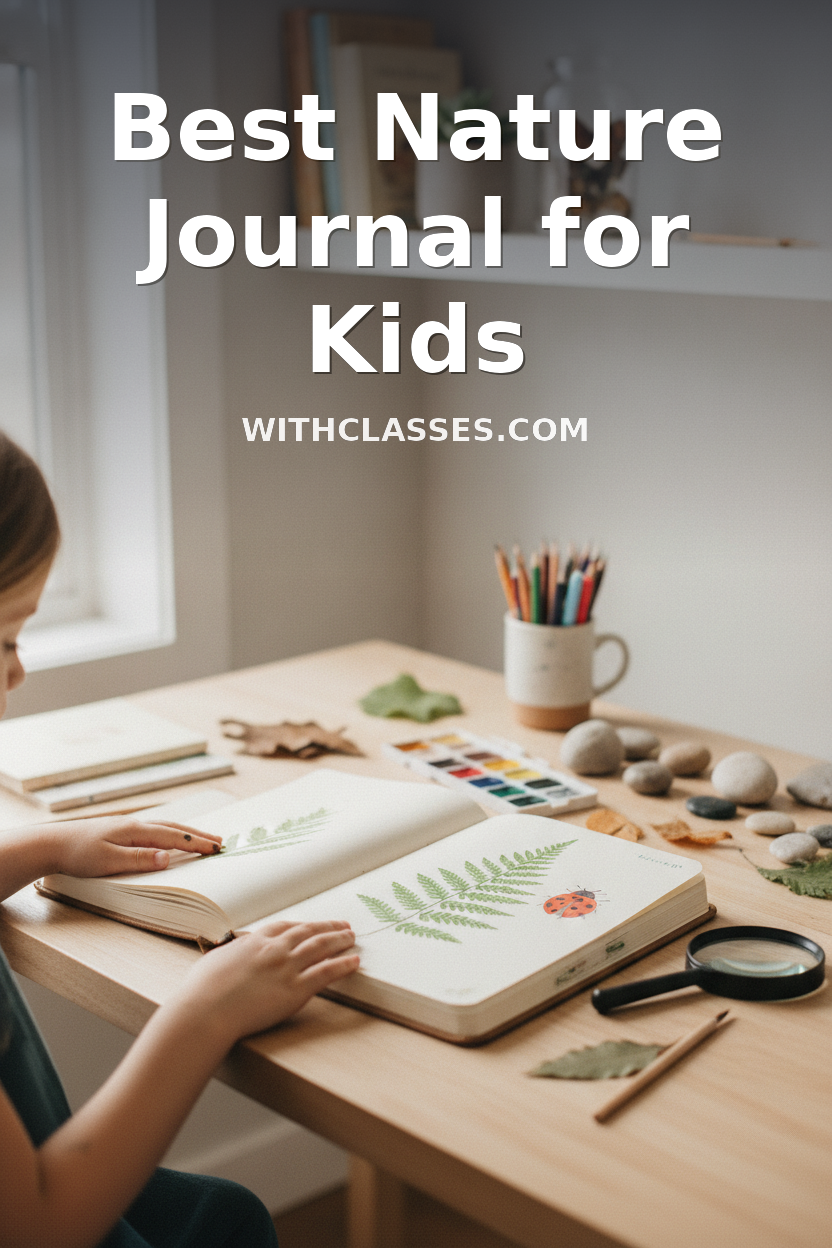
If you want one recommendation right now: the Exploring Nature Journal for Kids is the most genuinely useful nature journal we've found for homeschoolers — it's structured enough to guide learning without doing all the thinking for your child. Below we'll explain exactly why, and when the other two options might actually be a better fit for your family.
This page contains affiliate links. As an Amazon Associate we earn from qualifying purchases at no extra cost to you.
Quick Navigation
Exploring Nature Journal for Kids Outdoor Record Book
This is the nature journal I'd hand to most homeschool families without hesitation. It strikes a balance that's genuinely hard to find: it gives kids real prompts and categories (weather, habitat, species sketches, seasonal tracking) without turning into a workbook that kills the joy of being outside.
The layout feels intentional. There's room to draw, space to write observations in a child's own words, and enough structure that a distracted 8-year-old can still make meaningful entries without a parent hovering. It works well for ages 6 through 12, and older kids can go as deep as they want.
One caveat: this is a consumable resource. You'll go through it, and if you have multiple kids you'll need multiple copies. That's not a flaw — it just means budget for it.
Pros
- Structured without being rigid
- Wide age range (6–12 works well)
- Encourages real observation skills
- Prompts for all four seasons
- Room for drawings and written notes
- Affordable price point
Cons
- Consumable — one per child
- Paper quality is standard, not premium
- May feel too guided for very creative kids who prefer blank pages
Paperback · Recommended ages 6–12
Nature Study & Outdoor Science Journal — Thinking Tree
If you're already in the Thinking Tree ecosystem — or if you use a delight-directed or Charlotte Mason approach — this one will slot right into your routine. It's less structured than our top pick and leans more toward open-ended creative observation, which some kids genuinely thrive with.
The Thinking Tree style is distinctive: funky fonts, creative page layouts, fill-in prompts mixed with open space. Kids who love artsy journaling will take to this immediately. Kids who need more scaffolding may stall out on the blank spaces and hand it back to you.
It's also on the pricier side for what you get in terms of page count, so weigh that if you're buying for more than one child.
Pros
- Great for Charlotte Mason / delight-directed learners
- Encourages creative, open-ended entries
- Fun, engaging layout kids actually enjoy
- Works beautifully alongside nature study curriculum
Cons
- Higher price for page count
- Less scaffolding — some kids will struggle without prompts
- Quirky design isn't for every child or parent
- Better for ages 8 and up
Paperback · Best for Charlotte Mason or delight-directed learners
Lonely Planet Kids Explorer's Nature Journal
This one earns its place on the list for a specific kind of kid: the one who wants to feel like a real field scientist. The Lonely Planet branding carries a sense of adventure, and the journal leans into that — it's visually polished, full-color, and feels more like a keepsake than a workbook.
It's genuinely good for nature-curious kids who are less interested in structured curriculum and more interested in exploring. The prompts are engaging and the design encourages kids to come back to it. That said, it's not a deep science tool — it's more exploratory and light on the kind of systematic observation that builds real naturalist skills over time.
Consider this a strong gift option or a supplement to a more rigorous nature study program, rather than a standalone homeschool science resource.
Pros
- Beautiful, full-color design
- Adventure-forward tone kids find exciting
- Great as a gift or supplemental journal
- Easy to pick up and use independently
- Feels like a real explorer's notebook
Cons
- Less rigorous scientifically
- Not a standalone homeschool science resource
- Higher cost for what's inside
- Lighter on writing prompts and observation structure
Hardcover · Best as a gift or adventure supplement
Our Recommendation
So Which Nature Journal Should You Buy?
For most homeschool families, the Exploring Nature Journal for Kids is the right call. It builds real observation habits, works across a broad age range, and doesn't require you to do a lot of setup to make it useful. Pick it up, head outside, and your kids can start using it the same day.
Here's a quick guide if you're still deciding:
Best Overall
Exploring Nature Journal for Kids
Most homeschool families, ages 6–12, any curriculum style
Best for Charlotte Mason
Thinking Tree Nature Study Journal
Creative, self-directed learners already using Thinking Tree materials
Best Gift Option
Lonely Planet Kids Explorer's Journal
Adventure-loving kids, gifting, or supplemental outdoor exploration
Whatever you choose, the most important thing is getting outside and using it. Any of these will be a better tool than the fanciest journal that sits on a shelf.
Frequently Asked Questions
What age is a nature journal appropriate for?
Most structured nature journals work well starting around age 6, when kids can do simple drawings and basic writing. That said, you can start nature journaling with younger children — just with more parent guidance and simpler prompts (draw what you see, paste a leaf, write one word). Our top pick, the Exploring Nature Journal for Kids, works for a wide range and scales with your child's ability. For very young children (3–5), a blank sketchbook with some nature walks is honestly all you need to start.
Do nature journals count as science in a homeschool curriculum?
Yes — and they're actually one of the more effective ways to build real science skills in younger kids. Observation, classification, recording data over time, noticing patterns across seasons: these are foundational science habits that nature journaling builds naturally. Many Charlotte Mason and classical homeschool programs use nature journaling as a core component of their science approach, not just a supplement. For documentation purposes, keep completed journals — they make excellent portfolio pieces showing growth in both science and writing over time.
Should I get a structured nature journal or a blank sketchbook?
It depends on your child and your teaching style. A structured journal (like our top pick) gives kids who need scaffolding a clear place to start — they know what to record and in what order. A blank sketchbook gives creative kids total freedom, which can mean richer entries or it can mean nothing gets written at all. If your child has ever said "I don't know what to draw" and put the pencil down, start with a structured option. If they fill blank pages naturally and find prompts annoying, go blank. When in doubt, the structured journal is the lower-risk choice.