Best Multiplication Flash Cards for Kids (Tested & Reviewed)
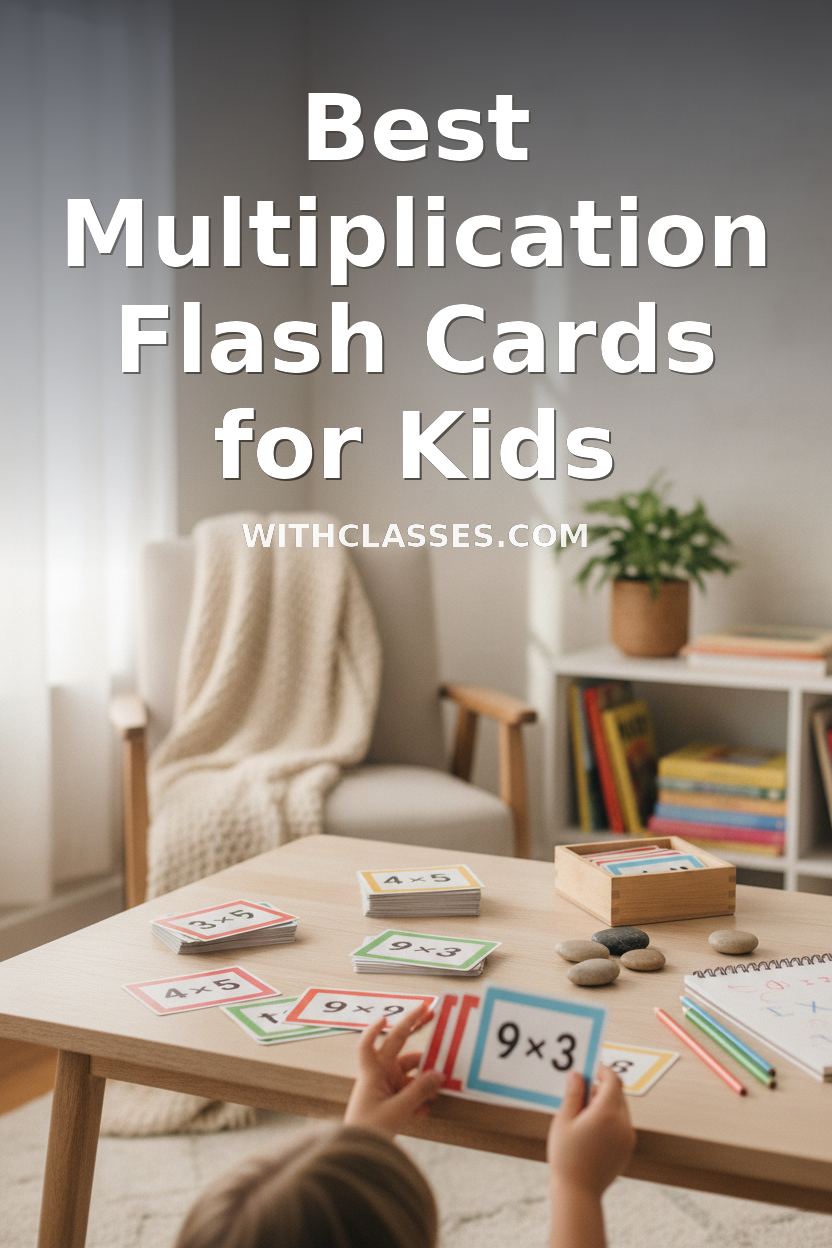
If your child is working on multiplication facts, a solid set of flash cards is still one of the most effective tools out there. We looked at three popular options so you can spend your time drilling, not shopping.
1. Think Tank Scholar 335 Multiplication Flash Cards
This set stands out immediately because of its sheer volume: 335 cards covering multiplication facts 0–12, including all the commutative pairs. That means your child isn't just memorizing one direction — they're building the kind of flexible number sense that actually sticks.
The self-checking feature is the real selling point for homeschool families. The answer is printed on the back in a way that lets kids check themselves without flipping the whole card over, which means they can practice independently without you sitting beside them. For parents managing multiple kids or subjects, that matters.
Cards are printed on sturdy stock with a clean, readable font. No cute distractions, no tiny print — just clear, functional design that keeps the focus on the math.
Pros
- 335 cards — the most comprehensive coverage of any set here
- Self-checking format encourages independent practice
- Includes commutative pairs for deeper fact fluency
- Durable card stock holds up to daily use
- Clean, distraction-free design
- Great value for the quantity
Cons
- 335 cards can feel overwhelming at first — you'll want to sort by fact family
- No ring or storage box included
- Slightly larger card size may not suit small hands
2. School Zone Multiplication 0–12 Flash Cards (56 Cards)
School Zone has been making flash cards for decades, and this set shows why they've lasted. With 56 cards covering 0–12 multiplication, this is a focused, manageable deck — good for younger kids who would be overwhelmed by 335 cards, or for families who want a quick daily drill without sorting through a massive pile.
The cards are color-coded by fact family, which is a genuinely helpful feature for kids who are just starting out. Colors give a visual cue that helps them organize and track what they know. The card stock is decent — not the thickest, but sturdy enough for regular use.
The tradeoff is coverage. At 56 cards, you're not getting commutative pairs or extended practice. It covers the basics well, but a child who needs more repetition may outgrow it faster than you'd like.
Pros
- Color-coded by fact family — visually helpful for beginners
- Manageable 56-card set, great for younger learners
- Trusted brand with a long track record
- Good size for small hands
- Affordable price point
Cons
- Only 56 cards — limited repetition for advanced practice
- No commutative pairs included
- Card stock thinner than Think Tank Scholar
- May feel too basic once facts start clicking
3. Scholastic Flash Cards: Multiplication 0–12
Scholastic is a familiar name in homeschool circles, and this multiplication card set is solid and no-frills. It covers facts 0–12 with a clean layout, and the answer is printed clearly on the back. Nothing fancy — and honestly, that's not a knock against it.
What sets this apart slightly is that Scholastic cards tend to have a slightly larger, bolder font than competitors in this price range, which is a real plus for kids who struggle with small text or visual processing. The cards are on the thinner side physically, so heavy daily use may cause wear over time — worth knowing if you're planning to use these for a full school year or pass them down to a sibling.
This is a perfectly respectable mid-range option. It won't disappoint, but it also won't wow you with anything that the Think Tank Scholar set doesn't do better at a similar price.
Pros
- Large, bold font — easier to read for visual learners
- Covers full 0–12 range clearly
- Reputable brand parents recognize and trust
- Clean, simple layout stays focused on math
- Compact card size, easy to handle
Cons
- Thinner card stock — may not survive a full year of heavy use
- No self-checking feature
- Fewer cards than Think Tank Scholar for similar cost
- No color-coding or organizational system
Our Pick — Bottom Line
If you can only pick one, go with Think Tank Scholar. The self-checking feature alone makes it worth it — your child can practice without you hovering, and that's gold when you're homeschooling. Sort the cards into fact families when they arrive and introduce one group at a time so the volume doesn't feel like a firehose.
See Think Tank Scholar on Amazon →Frequently Asked Questions
What age should kids start using multiplication flash cards?
Most kids are ready to start working on multiplication facts around age 7–8, typically second or third grade. That said, readiness varies — if your child has a solid grip on addition and understands the concept of equal groups, they're probably ready. Flash cards work best as a fluency tool after you've introduced multiplication conceptually, not as the first exposure.
How many minutes a day should kids practice multiplication flash cards?
Short and consistent beats long and sporadic every time. Ten to fifteen minutes a day — five days a week — is more effective than a 45-minute session once or twice a week. The brain retains math facts better through spaced repetition. Start with one fact family at a time (all the 3s, then all the 4s, etc.) and only move on when the current group is solid.
Are flash cards enough to teach multiplication, or do kids need more?
Flash cards are a fluency tool, not a teaching tool. They work best after a child understands what multiplication means — equal groups, arrays, repeated addition. Once the concept is solid, cards build speed and automatic recall, which frees up mental energy for harder math later. Use them alongside a math curriculum, not in place of one. If your child is guessing randomly on most cards, they probably need more conceptual work before drilling.