Best Anatomy Model for Homeschool: 3 Honest Picks Worth Your Money
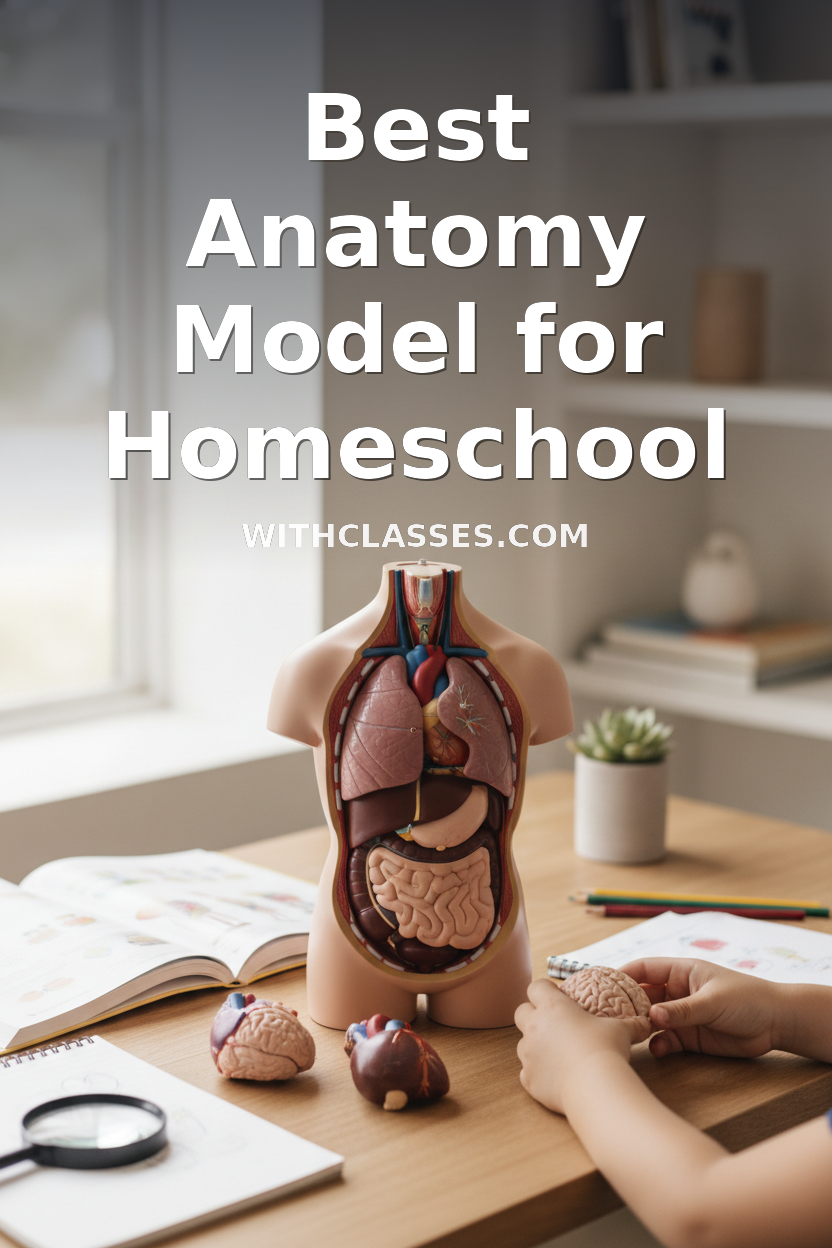
If you want one clear answer: the Science Can Human Body Talking Model is our top pick for most homeschool families — it's hands-on, narrated, and genuinely engaging for kids ages 4 to 10 without requiring any prep from you. Below we break down all three options so you can find the right fit for your child's age and your teaching style.
1. Science Can Human Body Model Kids Interactive Talking
This is the anatomy toy I'd hand to a 6-year-old and feel confident they'd actually learn something. Kids press organs on the 3D model body and hear real narrated facts — no workbook required, no lesson planning on your end. The voice feature keeps kids coming back to it on their own, which is honestly rare.
The model covers 13 organs across multiple body systems, and the audio is clear enough that even younger kids can follow along. It holds up well to daily handling, which matters when it's sitting on a school shelf getting picked up constantly.
Pros
- Talks — narrates organ facts when pressed
- Covers 13 organs across major systems
- Truly independent use; no adult required
- Durable 3D model, not just a flat poster
- Great for ages 4–10, wide usable range
Cons
- Audio is in English only
- Requires batteries (not included)
- Older kids (11+) may find it too basic
2. BEST LEARNING i-Poster My Body Interactive Talking Toy
This is a laminated poster version — so if you're working with a preschooler or a child who does better looking at a flat visual than holding a 3D model, this is the smarter buy. Kids tap body parts with a stylus pen and the poster responds with narrated facts and quiz-style prompts. It mounts easily on a wall and doubles as classroom decor.
The content is slightly simpler than the Science Can model, which makes it ideal for the 3–6 age range but means older kids will grow out of it faster. The quiz mode is a genuinely nice touch — it gets kids to recall what they've heard, not just passively listen.
Pros
- Interactive stylus makes it feel like a game
- Quiz mode reinforces what kids hear
- Wall-mount display keeps it visible daily
- Perfect entry point for ages 3–6
- Durable laminated surface
Cons
- Flat poster — less tactile than a 3D model
- Content is fairly simple; kids age out quickly
- Stylus pen can go missing (classic problem)
- Less organ detail than the Science Can version
3. Dan&Darci Human Anatomy Squishy Body Model Science Kit
This one is different from the other two — there's no audio, no stylus. Instead, kids layer squishy, removable organs into a body cavity themselves. It's tactile in a way the talking models aren't, and it creates a much stronger spatial understanding of where organs sit in the body and how they relate to each other. For a kid who is genuinely curious about anatomy, this is the most memorable learning experience of the three.
It works beautifully alongside a written curriculum — Charlotte Mason nature study, Apologia, or even just a library stack. The "squishy" factor isn't gimmicky; it actually helps kids remember the feel and placement of each organ. Best suited for ages 8 and up who won't lose the small pieces.
Pros
- Removable layered organs — spatial, tactile learning
- Best for older kids who want real depth
- Pairs well with any anatomy curriculum
- More medically accurate organ shapes
- Memorable hands-on activity format
Cons
- No narration or audio — needs adult guidance
- Small pieces — not for under 7
- More of an activity kit than ongoing resource
- Less independent use than talking models
Our Picks at a Glance
Every family's homeschool looks different. Here's how to quickly match the right model to your situation:
Frequently Asked Questions
It depends on the model. Talking poster-style models like the i-Poster work well starting around age 3. 3D interactive models like the Science Can version are great from about 4 to 10. Layered dissection-style kits like the Dan&Darci squishy model are best for ages 8 and up due to small parts and the need for more conceptual understanding. When in doubt, go younger — curiosity about the human body tends to show up early.
Not necessarily. The talking models (Science Can and i-Poster) are designed to be fully self-teaching — your child learns directly from the narration. You don't need to prepare anything. If you want to go deeper, models like the Dan&Darci kit work really well alongside a formal curriculum like Apologia's Exploring Creation with Human Anatomy, or even a good library haul of body books. But for younger kids, the model alone is plenty.
3D models win for tactile learners and kids who learn by doing — they can touch, press, and explore independently. Anatomy posters are better for visual learners, younger children who aren't ready for a freestanding toy, or if you want something displayed on a wall that stays visible throughout your school day. If your child loves to pick things up and manipulate them, go 3D. If they love looking at detailed diagrams and images, a poster fits better.